After a diagnosis of breast cancer, care providers’ initial emphasis is often on survival, but survivorship — everything that goes into the act of staying alive and as well as possible — may not always be discussed until changes in appearance begin to take their toll on a patient’s emotional well-being. Breast cancer treatments can result in dramatic changes to appearance, even outside of those caused by surgery.
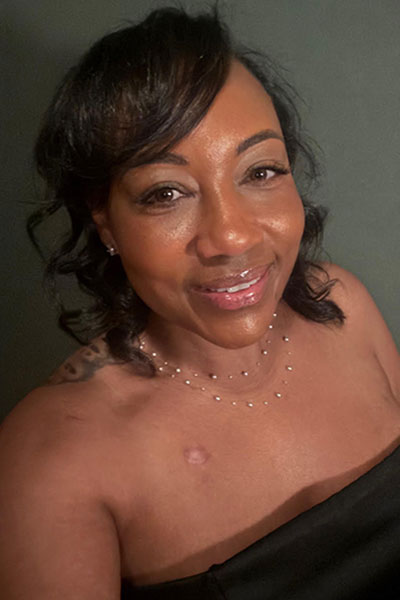
“I think that, as soon as you’re diagnosed, survivorship begins,” Marissa Thomas, a 10-year survivor of breast cancer and Co-Founder and CEO of For the Breast of Us. “Meaning, all of the things that the breast cancer will affect — weight gain, hair loss, both romantic and platonic relationships — should be discussed early, and patients should be given the resources and tools to help navigate those changes.”
During the 2025 San Antonio Breast Cancer Symposium®, Thomas and a panel of other experts will discuss these issues in Beyond Cancer: Addressing Body Image, Hair Loss, and Skin Health After Treatment on Friday, December 12, from 1 to 2:50 p.m. CT in Room 221ABC at the Henry B. Gonzalez Convention Center.
Tara Sanft, MD, Associate Professor of Medicine (Medical Oncology) and Director of the Smilow Cancer Hospital Survivorship Clinic at the Yale School of Medicine, will moderate the session. Ian W. Tattersall, MD, PhD, Assistant Professor in the Ronald O. Perelman Department of Dermatology at NYU Grossman School of Medicine; Mario Lacouture, MD, Chief of Dermatology at NYU Langone Hospital; and Christina M. Wilson, PhD, CRNP, WHNP-BC, a nurse practitioner and investigator at Virginia Gynecologic Oncology, will deliver presentations.
“This session is going to be important for cancer care providers and patient advocates, alike,” Thomas said. “I think providers will get some tips and tricks about how to provide better information for Black and Brown women, and I think advocates will be able to go a bit deeper to talk about the things that are under the surface like body changes.”
Encouraging conversations about changes
Although alopecia can be one of the most visible and potentially emotionally traumatic side effects of chemotherapy, Thomas believes that the conversations about preventing hair loss may not always happen prior to the start of chemotherapy. Conversations may also be different for White women compared with Black women. Hair texture, curl pattern, and hair care practices may affect the efficacy of scalp cooling or cold capping, which could result in the process being discussed with fewer Black female patients with breast cancer.
During her patient journey, Thomas found information about hair and scalp care through her personal network.
“My hairdresser told me that, even though I was bald, I should still be washing and oiling my scalp because this helps stimulate eventual hair growth. It also combats the dryness that chemotherapy can cause. These are the types of things that some patients have to find out on their own,” she said.
Thomas recommends that health care providers have a list of wig providers that specialize in all different types of hair so that every patient has the opportunity to look more natural.
In addition to hair and scalp issues, a number of skin-related issues can arise days to years after various treatments commonly used in breast cancer. These issues can pose serious health risks, but they can also dramatically impact a person’s confidence and self-esteem. For example, radiation therapy can cause hyperpigmentation or radiation dermatitis and increase the risk for secondary skin neoplasms, according to the Advanced Practitioner Society for Hematology and Oncology. Targeted therapies can cause issues such as acneiform rashes and dry skin, and immunotherapies have caused dermatologic effects, including lichenoid drug eruptions, in some patients.
Although oncology care providers are often knowledgeable about prevention and management of dermatologic toxicities and overall body changes due to treatment, Thomas recommends strengthening relationships with specialists, such as a dermatologist or dentist, who can help identify any potential changes to your body over time. This proactive approach may help a patient feel more empowered about changes to their bodies.
Regardless of what types of physical changes have happened over time for a patient with breast cancer, mental and emotional well-being may be fostered through connection with others who have also experienced similar issues. “I would encourage Black or Brown women with breast cancer to look to the patient community for examples of beautiful images of body changes for women like you, because you might not see these in provider offices,” she said. “I would also remind patients to remember that your body is constantly changing and that doesn’t mean it has robbed or betrayed you. Whether it is two years after being diagnosed or 10 years, you’re going to feel completely different at different stages and none of these feelings negate the others.”
For the Breast of Us is participating in the SABCS Patient Advocacy Pavilion for the first time this year. Stop by to learn about the Naked Truth Project, which is a series of beautiful photographs of Black and Brown survivors’ bodies, scars and all. There will also be information about For the Breast of Us 2026 conference.