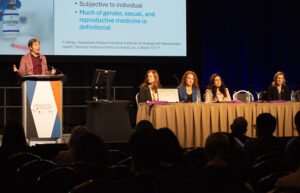


For years, there has been evidence of an association between breast cancer and lifestyle factors such as alcohol consumption and obesity. On Tuesday, December 9, during a special session at the 2025 San Antonio Breast Cancer Symposium®, a panel of experts examined the latest understanding about these connections and highlighted the importance of applying this knowledge in clinical practice.

“These are factors that affect us every day and, importantly, modifiable factors that we can take home for ourselves and particularly for the people we influence,” said Session Moderator Seema A. Khan, MD, Bluhm Family Professor of Cancer Research and Professor of Surgery at Northwestern University Feinberg School of Medicine.
Special Session 1: Open Bar and All You Can Eat? The Impact of Lifestyle in Breast Cancer Risk and Recurrence will be available to registered SABCS® 2025 participants through March 31, 2026, as an on-demand recording on the symposium’s virtual platform.
Overwhelming evidence

Julie R. Palmer, ScD, MPH, pointed to studies from the late 1970s and early 1980s affirming the connection between alcohol consumption and the risk of breast cancer.
Since these early studies, there has been “overwhelming evidence from epidemiologic studies that consuming alcohol is associated with an increased risk of breast cancer — and we are not sure, but there may be no safe level,” said Dr. Palmer, Karin Grunebaum Cancer Research Professor and Director of the Slone Epidemiology Center at Boston University Chobanian & Avedisian School of Medicine.
She called for additional studies on which biological mechanisms might be involved in the connection between alcohol and breast cancer, alcohol’s effect on the health of breast cancer survivors, and whether increased binge drinking among young women is related to the rise of breast cancer rates among this population.
Enhancing communication about the alcohol-cancer link
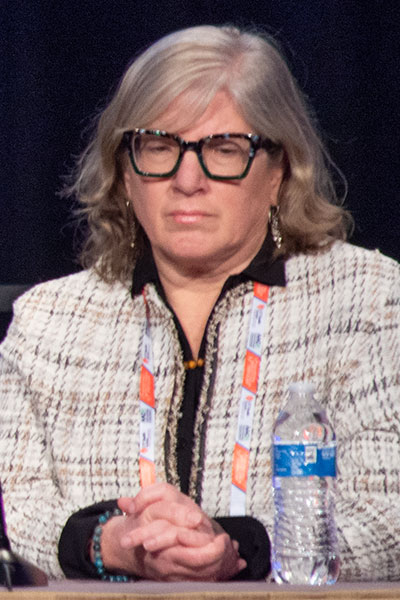
Turning to the practical application of this knowledge, Mary Beth Terry, PhD, encouraged clinicians to communicate the links between alcohol and breast cancer with their patients, as well as the potential benefits of reducing or eliminating alcohol consumption.
Dr. Terry, Professor of Epidemiology and Associate Director for Population Sciences and Community Outreach in the Herbert Irving Comprehensive Cancer Center at Columbia University and Executive Director of the Silent Spring Institute, suggested the discussion around alcohol cessation might draw lessons from the health community’s experience with smoking cessation.
“It’s like everything else that we think of in the so-called bucket of lifestyle, which I would argue is not just about individual lifestyle, but our cultural lifestyles that have promoted alcohol and other things that are much harder to quit later in life,” Dr. Terry said.
She added that the mounting evidence showing binge drinking is predictive of breast cancer and that more women are binge drinking presents a pressing public health concern.
“It’s important to know that that’s going to have pretty big impacts at a population level,” she said.
Obesity’s impact on breast cancer

Kristy A. Brown, PhD, outlined research examining connections between obesity and breast cancer at a molecular level.
“As we think about cancer prevention and treatment, we should be thinking not only about cell-targeting agents, but thinking about the microenvironment and potentially the whole body,” said Dr. Brown, Associate Professor of Metabolism and Cancer at the University of Kansas Medical Center and Co-Program Leader of the Cancer Prevention and Control Program at the University of Kansas Cancer Center.
Dr. Brown summarized literature suggesting that obesity can promote the growth of existing breast cancer through enhanced estrogen production, metabolic dysregulation, and interactions between cancer cells and adipocytes in the breast.
Emerging research is shedding light on the effect of adipocyte-derived extracellular vesicles on breast cancer cells. Extracellular vesicles released by adipocytes from women with obesity cause breast cancer cells to proliferate at higher rates in comparison to individuals without obesity, Dr. Brown said.
In addition to examining how obesity promotes the progression of existing cancer, recent studies have also focused on whether obesity can lead to the initiation of cancer. In one study, Dr. Brown examined this by using breast organoid models derived from normal breast tissue of BRCA1/2 mutation carriers and then overlaying them with adipose tissue from reduction mammoplasties from women with and without obesity.
“In this particular case, when we overlaid this adipose tissue from women with obesity, we were able to stimulate DNA damage, and that was not the case if the adipose tissue came from a woman without obesity,” Dr. Brown said.
In mouse models, obesity increased tumor penetrance and decreased latency of mammary tumor development.
The next step, Dr. Brown said, is to evaluate potential interventions that could reduce obesity-related cancer risk, such as metformin or obesity management medications.
Difficult conversations
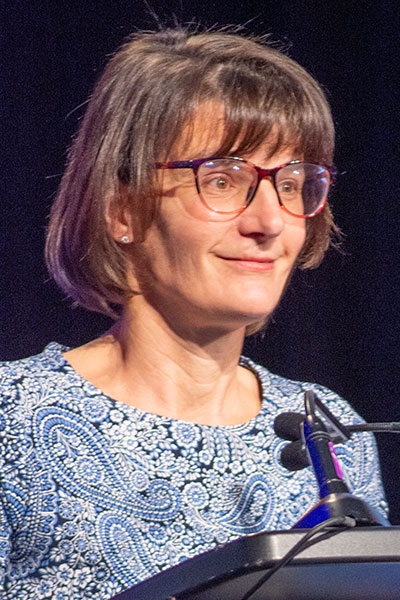
Patient advocate Stacey Tinianov, MPH, BCPA, of Advocates for Collaborative Education, called on attendees to apply these discussions in the clinical setting— even if it means difficult discussions with patients.
“This is fabulous, but if it stays in this room and doesn’t go back to clinic, it doesn’t change anything,” Tinianov said.
She urged health care professionals to tap patient advocates as resources to help formulate better ways to have these talks about alcohol or weight.
“You’re going to need to bring up these conversations — and it’s hard. Looking somebody in the eye and telling them that maybe they should not have a glass of wine with dinner, you will realize you are taking away something that brings them joy. Looking at people going through treatment, who are on steroids, who are struggling with their body image, who are losing body parts, and telling them that maybe they need to lose a few pounds — that’s hard,” Tinianov said. “But there are ways to have those conversations.”