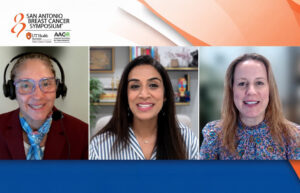
Terry Arnold woke up one day in her Texas home at age 49 with a breast that was red, hot, and swollen. Danielle Cameron was living in Canada and three months pregnant at age 39 when her breast became swollen, red, and painful. Neither woman had a history of breast cancer in her family and no obvious risk factors. After each experienced several misdiagnoses by a host of health care professionals, both women were told that they had inflammatory breast cancer (IBC) and that treatment would begin immediately. Now they are a team, each leading an IBC Network Foundation in her respective country.
The IBC Network Foundation was founded by Arnold to fund research and provide proactive education to health care providers, patients, and the general public about IBC, which can be difficult to diagnose due to its rare but rapid presentation, commonly through swelling and skin redness. The organization has worked with academic institutions, other advocacy groups, and the network of physicians and advocates that attend the San Antonio Breast Cancer Symposium® to provide a platform for research and policy related to IBC.
“Inflammatory disease is an orphan disease, which means it’s rare, typically aggressive, and fatal, and there is very little existing data or money for research,” said Arnold, an 18-year survivor. “The researchers need us, and we need them — it’s powerful.”
A global voice
The IBC Network Foundation is home to numerous educational resources for patients and providers, such as videos about the current standard of care for IBC, links to clinical trials and housing resources, and a podcast spotlighting both novel research and survivor stories. The IBC Learning Academy is a rigorous course for patient advocates who wish to participate more fully in improving access to care, increasing awareness of clinical trials, and participating in lobbying efforts.
As the organization’s work has expanded, so too has its reach. There are now independent IBC Network Foundations in the United Kingdom, Australia, and Canada, all with similar goals of inspiring researchers to focus on IBC. Each charity is unique, with leaders mentored by Arnold.
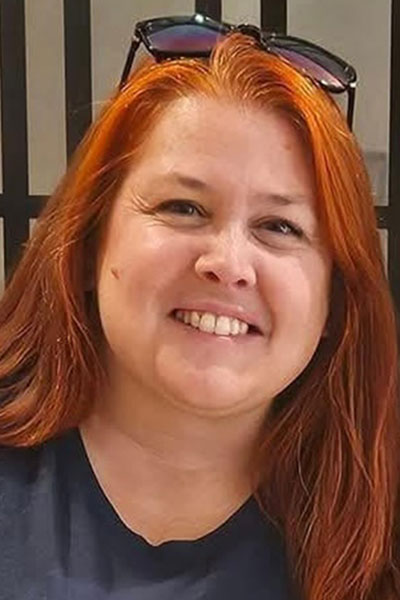
“Unfortunately, we don’t even have IBC-specific guidelines in Canada. IBC falls under a breast cancer umbrella, so we have patients who are being treated in the wrong sequence order or who are not getting urgent referrals. There are disparities across the whole country,” explained Cameron, President and Founder of the IBC Network Foundation Canada.
At SABCS
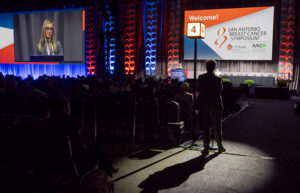
One of the major ways that the IBC Network Foundation has increased the volume of its voice is by being an active part of SABCS® for several years. Arnold noted that she joined an Alamo Breast Cancer Foundation committee after attending SABCS early in her advocacy journey — an experience she found profoundly educational. The IBC Network Foundation also submitted a poster in 2019, which revealed family discouragement as the largest hurdle for women when going to specialty clinics outside of their immediate communities. Two years ago, both the U.S. and U.K. foundations were featured in a People’s Choice session. The session provided education for breast cancer care providers on key differences for IBC from other breast cancers regarding clinical presentation, staging, genomic pathways, and therapeutic considerations.
This year, Arnold and Cameron are excited to staff the IBC Network Foundation booth in the Patient Advocacy Pavilion within the SABCS Exhibition Hall. Cameron is eager to make connections with international researchers, scientists, and care providers who may be able to help her network in Canada expand their research.
“For me, I’d say this year is more about learning and observing. We are lucky that we have found two scientific advisors who we are hoping will help us find interested researchers. We’d love to be able to leave SABCS with some new connections,” Cameron said.
Arnold will be promoting the five new merit awards that the IBC Network Foundation is sponsoring for the first time. In collaboration with the American Association for Cancer Research, each award provides $1,000 to support the participation and presentation of five highly rated abstracts focusing on inflammatory breast cancer research.
“How do you wrap a scarier-than-hell message in hope?” Arnold asked. “We feel like the best way to help patients is to move this disease out of the orphan category so that everyone gets proper detection and proper treatment based on solid clinical trial research. So we have to help fund research.”
Patient Advocacy at SABCS
For more resources about patient advocacy support and involvement at SABCS 2025, visit the Patient Advocates page at SABCS.org. Learn more about advocate registration options, the SABCS Patient Advocate Lounge, the SABCS Patient Advocacy Pavilion, advocates participating in the SABCS program, and additional advocacy-related educational programs and networking events.