Liquid biopsy — detection of circulating tumor cells, circulating tumor DNA (ctDNA), the tumor-derived fraction of cell-free DNA (cfDNA), or other tumor-derived molecules in bodily fluids, especially blood — is an emerging non-invasive tool to complement tissue biopsy-based analyses in breast cancer clinical care.
At the 2025 San Antonio Breast Cancer Symposium®, experts will discuss how the technology can optimize risk assessment and personalize treatment approaches in breast cancer during State of the Art 1: Refining Risk and Tailoring Treatment: Liquid Biopsy for Adaptive Therapy in Breast Cancer on Wednesday, December 10, from 1 to 2:15 p.m. CT in Stars at Night Ballroom 1-2 at the Henry B. Gonzalez Convention Center.
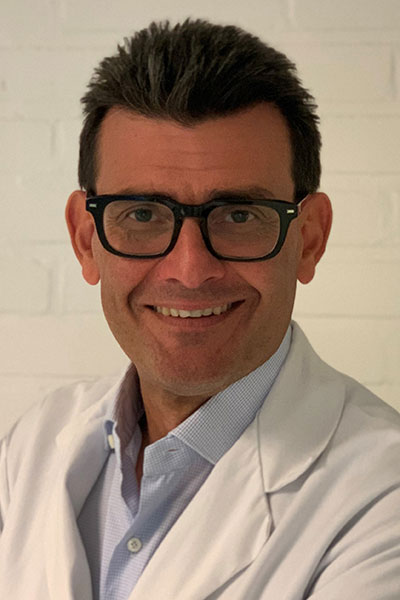
“There are three major clinical applications of liquid biopsy currently in use or under development: In early cancer detection, for surveillance of micrometastases after treatment of the primary tumor, and for treatment selection and response monitoring in patients with metastatic disease,” said Michail Ignatiadis, MD, PhD, Director of the Breast Medical Oncology Clinic and Program at the Institut Jules Bordet, who will present during the session.
Angela DeMichele, MD, MSCE, Mariann T. and Robert J. MacDonald Professor in Breast Cancer Care Excellence at the University of Pennsylvania Perelman School of Medicine, will begin the session with a presentation on integrating imaging and ctDNA-based liquid biopsy to personalize neoadjuvant strategies. Dr. DeMichele will review recent data supporting the use of ctDNA in the neoadjuvant setting and the approaches being used by the I-SPY trial and others to advance this field.
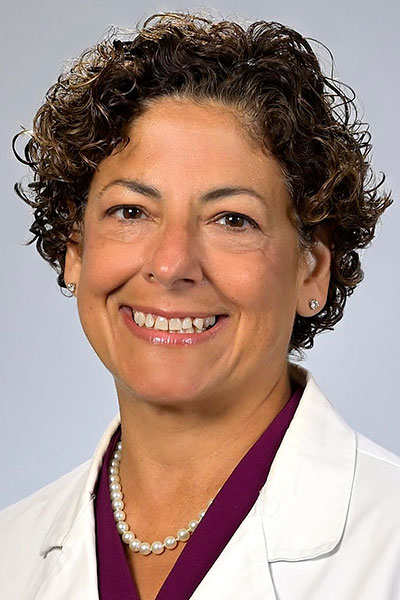
“Utilizing both radiologic imaging and changes in ctDNA to determine response to neoadjuvant therapy in real time holds great promise to enable individualized treatment. Prognostically, both technologies appear useful,” she said. “The next step is to determine the utility of one or both technologies to ‘right size’ therapy in order to optimize the type and amount of therapy each patient needs to reach the goal of complete pathologic response.”
Dr. Ignatiadis will then discuss how ctDNA-based liquid biopsy may offer a way to monitor minimal residual disease (MRD) in real time, informing residual risk following surgery.
“These are exciting times because we are trying to use this tool to provide personalized treatment, to escalate or de-escalate therapy,” he said of ctDNA monitoring in early-stage disease, noting that liquid biopsy should be used in concert with existing tools.
“In current practice, we use standard clinical pathological characteristics, such as the disease stage, tumor size, nodal status, and tumor grade, along with genomic assays, to make decisions about adjuvant chemotherapy,” Dr. Ignatiadis said. “However, not all patients who receive systemic adjuvant treatment benefit, while some patients may need more aggressive adjuvant therapy.”
The potential of using ctDNA in surveilling molecular recurrence is being explored in ongoing clinical trials, he said. The TREAT ctDNA phase III trial, for instance, is evaluating the impact of switching from standard endocrine therapy to the oral selective estrogen receptor degrader (SERD) elacestrant based on ctDNA positivity on survival outcomes, safety, and quality of life in patients with intermediate- to high-risk early-stage breast cancer.
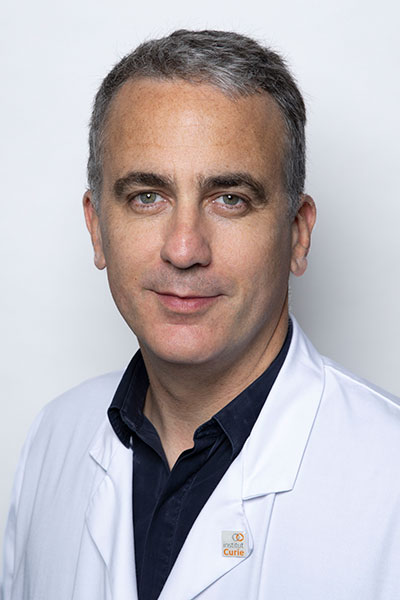
François-Clément Bidard, MD, PhD, Professor of Medicine at the Institut Curie, will conclude the presentations by highlighting liquid biopsy’s role in guiding treatment in the metastatic breast cancer setting.
While ctDNA-adapted treatment in early-stage breast cancer is an emerging application, Dr. Bidard said, “in the advanced disease setting, there is a high level of evidence for the liquid biopsy approach, which has been used now for over five years. ctDNA-based tumor profiling technology is robust and we know how to use it, even though clinicians need further education on how to use this tool in practice.”
Dr. Bidard will focus on ctDNA-based mutational profiling for early identification of resistance alterations. The PADA-1 proof-of-concept study, for instance, showed that an early change in therapy for patients with advanced breast cancer, based on rising levels of ESR1-mutated ctDNA, was feasible and clinically beneficial. The phase III SERENA-6 multinational trial — evaluating therapeutic switching to camizestrant, an investigational oral SERD, upon detection of resistance mutations — expands on the PADA-1 findings.
“We are at the beginning of a potentially long story. This is a completely new strategy, guided by evolving evidence, that may change the way we treat patients eventually, beyond the SERENA-6 implications,” Dr. Bidard said, adding that additional evidence and prospective studies are needed.
David Cescon, MD, PhD, Medical Oncologist and Clinician Scientist at the Princess Margaret Cancer Centre, will moderate the session, and Tracy Edler Solak, of the Young Survival Coalition, will share the patient advocate perspective.
“ctDNA is here to stay,” Dr. Bidard said. “The topic of liquid biopsy continues to be very relevant, and this symposium serves an important role in educating the breast cancer community.”
Session titles, times, and locations are subject to change. For the most up-to-date SABCS program information, please visit the Program page at SABCS.org.