Artificial intelligence (AI) has already made substantial impacts in breast cancer research and clinical care, particularly in terms of pathology imaging and workflow. Now, emerging AI tools and models are expanding possibilities for clinical applications and raising practical and ethical considerations about their integration into comprehensive breast cancer treatment.
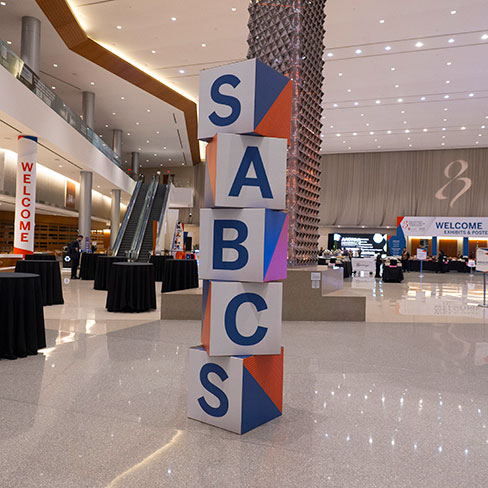
During the 2025 San Antonio Breast Cancer Symposium®, Educational Session 15: Real Impact with Artificial Intelligence will address the roadmap of AI in breast cancer — where it is currently, which direction it might be going, and what tools should be used to evaluate its contributions. The session will be held on Thursday, December 11, from 2:30 p.m. to 4:15 p.m. CT in Stars at Night Ballroom 3-4 at the Henry B. Gonzalez Convention Center.
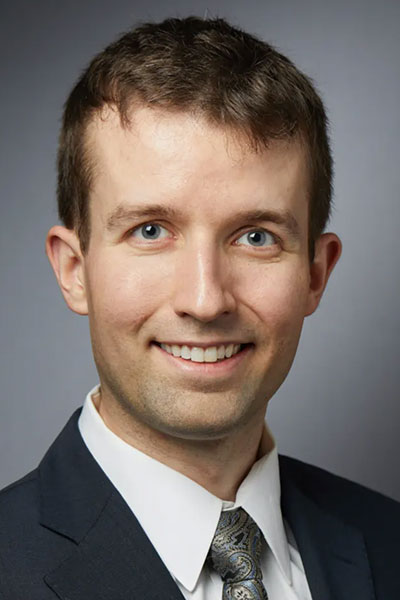
Session Moderator Frederick Howard, MD, Medical Oncologist and Assistant Professor of Medicine at the University of Chicago, has conducted extensive research on oncology and AI.
“There are approved AI tools that basically do things that can already be done by a pathologist, like quantify immunohistochemistry (IHC) or say whether there is cancer on a slide or even on a lymph node resection,” Dr. Howard said. “But when we get into these newer models that go beyond the human eye—that’s where the real excitement is. Instead of simply making new or existing tests quicker and faster, this technology would allow us to draw on personalized information and make new and better decisions for patients.”
Panelist Johan Hartman, MD, will guide attendees through some of these AI possibilities in digital biomarkers and risk prediction. Dr. Hartman, Professor at Karolinska Institutet and Scientific Director for the Swedish Society for Pathology, has led extensive research on digital image analysis in histopathology and AI-assisted prediction of individualized breast cancer therapy response.
“I’d say probably the hottest area is risk stratification for predicting risk of recurrence and chemotherapy benefit,” Dr. Howard said. “I think we are going to see some AI models and tools that will provide a test that is as good or better than current genomic testing, like Oncotype DX or MammaPrint, at cheaper and faster rates.”
Dr. Howard said the panel might also focus on the prospects around AI projects to more accurately identify HER2-low breast cancer through quantitative analysis that might provide superior patient stratification in comparison to traditional IHC-based classification.
The session’s second panelist, Tufia C. Haddad, MD, Oncologist and Chair of Practice Innovation and Platform at the Mayo Clinic Comprehensive Cancer Center, will examine the practical deployment of AI tools in medical oncology, such as to help match patients to clinical trials.
Dr. Howard described this section of the session as approaching AI from a clinician’s perspective: What clinical endpoints will AI change? How will AI integrate into trial-matching tumor board decisions? What are some good and some bad examples of the use of these AI tools in a clinical setting?
The session’s third panelist, Amrita Basu, PhD, Associate Professor of Surgery at the University of California, San Francisco, will draw on her experiences in leading the implementation of AI approaches to track, monitor, and intervene on patient-reported outcome data from the I-SPY2 clinical trial. Her presentation will explore how AI can rapidly process large volumes of patient data to improve the detection of adverse events.
As clinicians and patients increasingly turn to AI to effectively improve various aspects of breast cancer care, important questions remain about these models’ transparency, accountability, and ethical application in breast cancer care. As Dr. Howard noted, reservations about adopting and integrating AI in breast cancer therapy are neither new nor unfounded.
“There’s a lot of tension between clinicians, researchers, hospital administration, and legal teams around how we can use these tools and use them responsibly,” he said. “But also, people are excited and want to get them in their hands as soon as possible.”
One additional, essential consideration in the integration of AI technology is how patients will react to AI diagnostic and prognostic tools.
Carole L. Baas, PhD, will round out the session’s panel and provide some of that perspective as a breast cancer survivor and the National Advocate for the Physical Sciences in Oncology Network of the National Cancer Institute.
“I think this session is going to be very relevant to researchers, because it will highlight how these AI tools are actually getting implemented in the clinic and what important questions researchers need to consider as they develop the next generation of tools,” Dr. Howard said. “But also from the clinical perspective, the nursing perspective, and the support staff perspective, there will be a lot of AI integrations so it is important to know how we can use these tools to be more efficient, to improve the quality of information we provide patients, and ultimately to take better care of our patients.”
Session titles, times, and locations are subject to change. For the most up-to-date SABCS program information, please visit the Program page at SABCS.org.