

In recent years, local therapy for breast cancer, most notably management of the axilla, has undergone a clear shift toward de-escalation, refining treatment to avoid overtreatment while ensuring optimal outcomes for each patient.
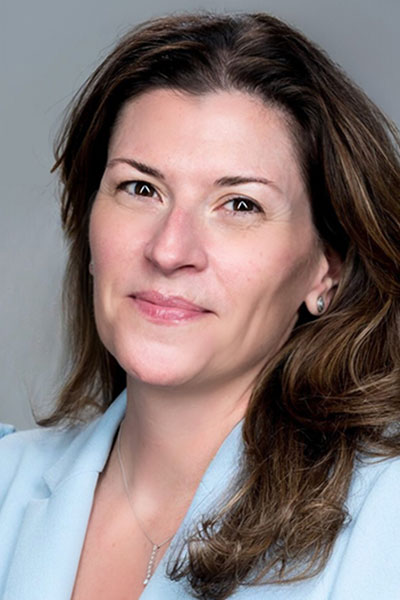
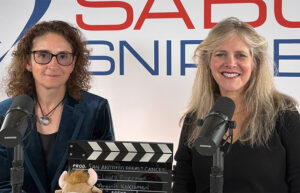
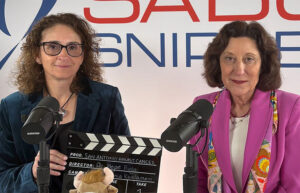
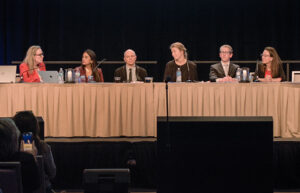
The 2025 San Antonio Breast Cancer Symposium® will explore this timely and evolving topic during Clinical Controversies: Management of the Axilla in Multidisciplinary Care on Thursday, December 11, from 1 to 2:15 p.m. CT in Stars at Night Ballroom 1-2 at the Henry B. Gonzalez Convention Center. Tari A. King, MD, Professor and Chief of the Division of Breast Surgery in the Department of Surgery at Emory University School of Medicine, will moderate the session.
“We are encountering increasingly complex multidisciplinary treatment decisions where we are trying to balance our local therapies — surgery and radiation — with systemic therapy to right-size care for our patients with breast cancer,” Dr. King said.
“We have a robust body of data demonstrating that we can omit axillary lymph node dissection in patients who achieve a nodal pathological complete response (pCR) after neoadjuvant chemotherapy (NAC). With the publication of the NSABP B-51 clinical trial, we now also have data suggesting that regional nodal irradiation can be omitted in this same patient population,” Dr. King continued. “We’re at a point where, as a community, we have to decide: are we truly comfortable de-escalating both local treatment modalities at the same time for women who present with biopsy-proven nodal disease? Specifically, we need to be confident that de-escalating both treatment modalities does not increase the risk of locoregional recurrence.”
Giacomo Montagna, MD, MPH, a breast surgeon at Memorial Sloan Kettering Cancer Center, will kick off the session by providing insights into the de-escalation of axillary surgery after NAC.
“This body of literature has evolved over the last several years, and Dr. Montagna has led several of the important retrospective multicenter studies that have demonstrated the safety of this approach,” Dr. King said.
Next, Lori J. Pierce, MD, Professor of Radiation Oncology and Vice Provost for Academic and Faculty Affairs at the University of Michigan and Past President of the American Society of Clinical Oncology, will discuss de-escalation of regional nodal radiation after NAC in clinically node positive patients who experience a nodal pCR.
This represents a continuation of the discussion from SABCS® 2024, where attendees examined the implications of the NSABP B-51 trial. The trial’s results, which were reported at SABCS 2023, showed that omission of regional nodal irradiation in this population did not result in inferior invasive breast cancer recurrence-free survival. Findings from a recently published single-center cohort study from the Netherlands provides additional support for the safety of omission of both axillary surgery and axillary radiation in this population.
Sherry Shen, MD, a breast medical oncologist at Memorial Sloan Kettering Cancer Center, will round out the session by exploring adjuvant therapy decision-making in hormone receptor-positive, human epidermal growth factor receptor 2-negative breast cancer in the era of axillary de-escalation.
This includes discussing how potentially “incomplete” information about the total number of involved nodes might impact systemic therapy decision-making, Dr. King said. For example, if a surgeon performs a sentinel lymph node biopsy and finds that three nodes are involved, “do we really need to perform an axillary node dissection to determine if there are four or more nodes involved for adjuvant therapy decision-making?” she asked. “Is the difference between having three or four positive nodes significant enough to change treatment decisions or change long-term patient outcomes?”
N. Beth Emery, of the Alamo Breast Cancer Foundation, will share the stage and speak to the patient perspective. Dr. King said she hopes the session will culminate in a spirited panel discussion, spotlighting the real-world challenges that multidisciplinary team members face in tumor boards every day, across the country and around the globe.
Session titles, times, and locations are subject to change. For the most up-to-date SABCS program information, please visit the Program page at SABCS.org.