

Antibody-drug conjugates (ADCs) have transformed the treatment landscape in breast cancer, with four ADCs currently approved in the United States for breast cancer indications. Two target human epidermal growth factor receptor 2 (HER2) — trastuzumab emtansine (T-DM1) and trastuzumab deruxtecan (T-Dxd) — while another two target trophoblast cell surface antigen 2 (TROP2) — sacituzumab govitecan (SG) and datopotamab deruxtecan (Dato-Dxd).
Back-to-back sessions at the 2025 San Antonio Breast Cancer Symposium® will explore the leading edge of ADC research, including biomarker implications, mechanisms of action (MOAs), and considerations for the use of ADCs in clinical practice.
ADCs as targeted therapy or chemo?
Translational Controversies: ADCs, Targeted Therapy, or Chemo? will take place on Wednesday, December 10, from 1 to 2:15 p.m. CT in Stars at Night Ballroom 3-4 at the Henry B. Gonzalez Convention Center. During the session, experts will present arguments supporting different mechanisms of action for the anti-tumor activity of ADCs and discuss the implications of HER2-low and -ultralow designations.

Sarat Chandarlapaty, MD, PhD, Naddisy Foundation Chair in Breast Cancer Research at Memorial Sloan Kettering Cancer Center, will make the case for a target-mediated MOA. In support of this perspective, Session Moderator David Rimm, MD, PhD, Anthony N. Brady Professor of Pathology and Professor of Medicine (Medical Oncology) at the Yale School of Medicine, pointed to the example of the final analysis of the phase III ASCENT trial.
This trial showed a trend toward higher overall response rate and longer overall survival with the TROP-targeting ADC SG, compared with chemotherapy, in patients with tumors expressing progressively higher TROP2 levels. The most marked difference in outcomes was seen between groups with the lowest and highest TROP2 histochemical scores.
“We have pretty good evidence that the response to [SG] therapy is proportionate to the expression of TROP2 molecule,” he said.
Sara Hurvitz, MD, Professor of Clinical Research at Fred Hutchinson Cancer Center, will argue that ADCs function primarily through a payload-driven MOA. In support of this argument, Dr. Rimm explained that T-Dxd cleavage by cathepsin-L in the extracellular matrix or serum has been shown to release the deruxtecan payload, enabling target-independent anti-tumor cytotoxic activity.
Further, he pointed to data showing responses to ADC therapies in some patients lacking tumor target expression, such as patients in the phase II DAISY study who experienced responses to T-Dxd despite having breast cancers that were HER2-negative, based on immunochemistry (IHC).
Dr. Rimm noted, however, that HER2-low and -ultralow tumors cannot be identified using available IHC assays.
“The current HER2 IHC assay is not reproducible between pathologists, as it is not designed for the low or ultralow HER2 dynamic range,” he said.
To provide the pathologist perspective on this topic, Dennis Sgroi, MD, Professor of Pathology at Harvard University, will present “HER2 low/ultralow: What the Pathologist Sees.”
Dr. Rimm, who spearheaded development of the TROPLEX dual biomarker assay to measure HER2 and TROP2 levels, advocated for the use of appropriate validated biomarker assays to enhance the molecular characterization of tumors.
As to the proportion of the ADC anti-tumor activity attributable to target- versus payload-mediated MOAs, additional studies may provide answers over the next few years, he said.
ADCs in the clinic
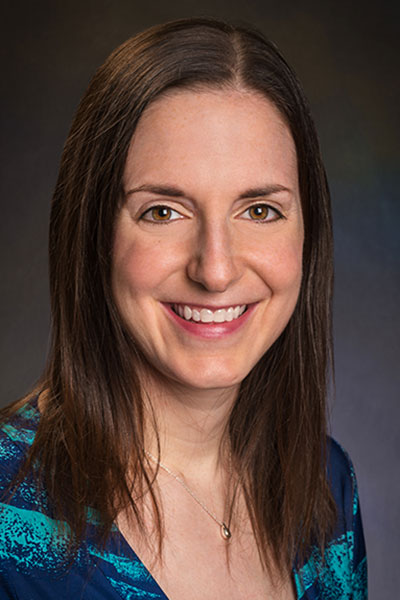
Educational Session 6: ADCs in the Clinic will directly follow on Wednesday, December 10, from 2:30 to 4:15 p.m. CT in Stars at Night Ballroom 1-2. Adrienne G. Waks, MD, Associate Director of Breast Oncology Clinical Research at the Dana-Farber Cancer Institute, will moderate the session.
“A session focused on ADCs in breast cancer clinical care is so essential,” Dr. Waks said, “because of the rapid pace and volume of new clinical data supporting their efficacy across breast cancer subtypes.”
She highlighted recent data from two impactful T-Dxd trials — DESTINY-Breast11 in early-stage disease treated with T-Dxd preoperatively, and DESTINY-Breast05 in high-risk early-stage breast cancer treated with T-Dxd after neoadjuvant therapy.
“We have to figure out which patients need T-Dxd and how to manage T-Dxd toxicities in the early-stage breast cancer population,” Dr. Waks said. “These are exciting new data.”
During the session, Sibylle Loibl, MD, CEO of the German Breast Group Forschungs GmbH, will present on ADCs in early-stage breast cancer, and Reshma Mahtani, DO, Chief of Breast Medical Oncology at the Miami Cancer Institute, will discuss how best to choose from among ADCs in the advanced disease setting.
“We’ve seen the incredible effectiveness of these drugs across every breast cancer subtype — estrogen receptor-positive, HER2-positive, and triple-negative breast cancer — compared to chemotherapy, but also their unique toxicities. Are we monitoring patients appropriately? Also, now with multiple ADC options approved in the metastatic setting, how do we decide which one to use, and how well does one ADC work when used after another?” Dr. Waks said. “Understanding optimal sequencing is an important unmet need.”
Andrew Brenner, MD, PhD, Professor of Medicine at The University of Texas at San Antonio, will also address the implications of central nervous system involvement for ADC therapeutic decision-making.
“Since ADCs are a new drug class with new chemical structures,” Dr. Waks said, “it is important to talk specifically about the activity of these agents in the context of brain metastases, both thematically across all ADCs, and also for each agent.”
Panelists will be joined by patient advocate Rosa Olmos, of Con Cáncer y Con Metas.
“I think it is going to be a great opportunity to hopefully understand from these experts what we can take from all the data that have been presented and really bring it to bear for our patients and for their benefit,” Dr. Waks said.
Session titles, times, and locations are subject to change. For the most up-to-date SABCS program information, please visit the Program page at SABCS.org.