

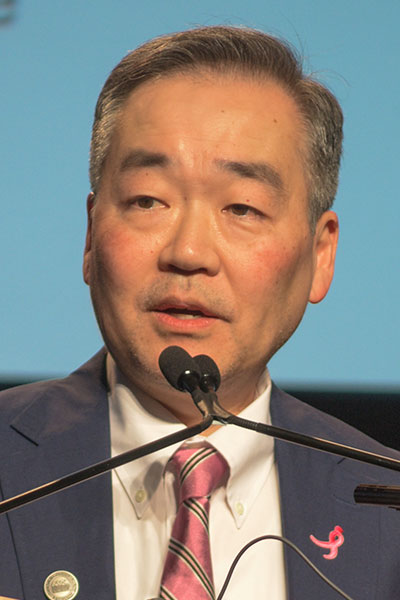
Circulating tumor DNA (ctDNA) detection has the potential to be a transformative tool for adjuvant treatment of breast cancer, said Ben Ho Park, MD, PhD, the 2025 recipient of the American Association for Cancer Research (AACR) Distinguished Lectureship in Breast Cancer Research.
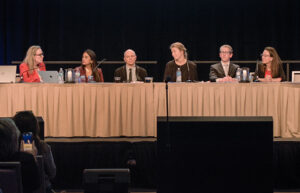
During an award lecture on Thursday, December 11, at the San Antonio Breast Cancer Symposium®, Dr. Park described a near-possible future where treatments will not be “giving everyone everything and the kitchen sink,” but will apply knowledge from ctDNA detection to determine which, if any, adjuvant therapies will be most effective for each particular patient.
“I think ctDNA detection could really change the paradigm and rationale for how we are going to treat cancer patients — at least solid tumor patients — in the future,” he said.
A recording of the lecture will be available on demand for registered SABCS® 2025 participants through March 31, 2026.

Presenting the prize, award selection committee member Stephanie Wong, MD, MPH, said, “Dr. Park is internationally recognized for groundbreaking scientific contributions that have profoundly shaped our understanding of breast cancer biology and brought precision medicine into everyday clinical practice.”
Dr. Wong recounted how research led by Dr. Park identified and defined how PI3K/AKT signaling becomes deregulated during tumor progression; provided critical insights into therapeutic resistance, invasion, and metastasis; and helped launch modern ctDNA research and cemented liquid biopsy as a powerful, minimally invasive tool for monitoring disease.
She added that Dr. Park’s career was a “testament to how visionary science, when combined with clinical insight and an unwavering commitment to his patients can reshape an entire field.”
Dr. Park, Director of the Vanderbilt-Ingram Cancer Center, the Benjamin F. Byrd, Jr. Chair in Oncology, and Professor of Medicine in the Division of Hematology/Oncology at the Vanderbilt University Medical Center, focused his presentation on past breakthroughs and potential future applications of ctDNA detection.
Beginning in the mid-2010s, he and his colleagues began publishing studies on ctDNA detection in metastatic and early-stage disease. This required developing techniques to preserve ctDNA integrity and applying an early digital PCR approach, BEAMing, to detect mutations and concordance between ctDNA and tumor tissue.
In terms of metastatic breast cancer, the work led to the understanding that metastatic breast cancer mutations such as PIK3CA or ESR1 can be reliably detected within ctDNA, and that a quantitative analysis of ctDNA could be used to detect mutations and monitor the disease and therapy response.
Dr. Park and colleagues were also examining how ctDNA detection could be utilized in specific settings such as microscopic metastatic residual disease and to determine adjuvant therapies for early-stage disease of all subtypes.
He and his teams continue to examine how ctDNA detection might be applied during neoadjuvant chemotherapy treatment. If, for example, results indicate what Dr. Park called a “liquid pathologic complete response,” meaning that the patient’s blood had undetectable ctDNA after therapy, then treatments could proceed without surgery — an approach he compared to groundbreaking applications for axillary sentinel lymph node biopsies pioneered by Armando E. Giuliano, MD.
Looking forward, Dr. Park said similar techniques in ctDNA detection and monitoring could also lead to advancements in adjuvant treatments.
“Perhaps that is going to be a paradigm that will lead to different drugs being used for different patients,” he said, because ctDNA detection can enable monitoring response to adjuvant therapies based on whether or not there is depletion of the ctDNA with time. Though he believes the concept of applying ctDNA readings toward adjuvant treatment has passed the validation point, Dr. Park cautioned that the final steps in getting to what might be a new stage of personalized medicine required the due diligence of prospective randomized trials.
He also said it was essential to go beyond determining whether the technique will work. Full validation requires being able to confidently and positively answer another question: “Does it lead to clinical outcomes that will help our patients?”
Supported by Aflac, Inc., the AACR Distinguished Lectureship in Breast Cancer Research has been awarded since 2008 to recognize outstanding science that has inspired, or has the potential to inspire, new perspectives on the etiology, diagnosis, treatment, or prevention of breast cancer.