Breast cancer is one of the most common cancers in women globally—and among the deadliest. The dual impact of high incidence and high mortality rates in breast cancer highlights a critical global health burden.
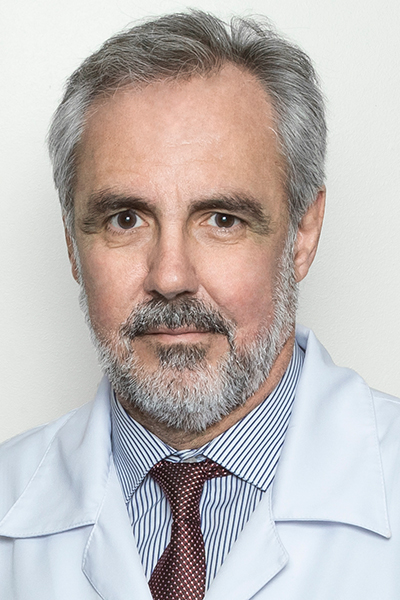
At the 2026 San Antonio Breast Cancer Symposium®, a special session will help attendees understand the scope of the challenges facing patients with breast cancer around the world and the clinicians who treat them, as well as potential remedies to reduce the global breast cancer burden. A Global View of Breast Cancer—From Population Risk to Precision Care will be held on Tuesday, December 8, from 11 a.m. to 12:30 p.m. CT in Stars at Night Ballroom 1-2 at the Henry B. Gonzalez Convention Center. Carlos H. Barrios, MD, director of the Oncology Research Center at Hospital São Lucas and president of the Latin American Cooperative Oncology Group, will serve as moderator.
“This session will cover the global aspects of breast cancer, recognizing the significant biological differences in the epidemiology of the disease across geographic regions; the disproportionately higher mortality rates in low-resource regions compared to high-income countries, even while incidence rates are lower than in high-income countries; and the rising rates of breast cancer in younger women, which may be increasing faster than in older adults,” Dr. Barrios said.
“Getting more information about this younger population that might help explain this discrepancy is an important concept for us to discuss,” he added. “It is a challenge to analyze all these epidemiological and geographic disparities, but understanding the rise in early-onset breast cancer and the differences in the molecular subtype of breast cancer across populations is critical to be more effective when designing strategies to control the disease and improve patient outcomes in different parts of the world.”
Valerie McCormack, PhD, MSc, deputy head of Environment and Lifestyle Epidemiology Branch at the International Agency for Research on Cancer, will lead off the session with a presentation on the global and translational patterns in breast cancer epidemiology.
Sarah (Sally) Friedewald, MD, academic division chief of breast imaging at Mass General Brigham, will follow with an examination of the rates of breast cancer screening across health systems worldwide.
Christina Curtis, PhD, MSc, FAACR, the RZ Cao Professor of Medicine, Genetics, and Biomedical Data Science at Stanford University, will deliver a talk on the multiomic architectures of breast tumors over a variety of patient populations.
And rounding out the presentations will be a discussion on the global landscape of breast cancer clinical trials by Ava Kwong, PhD, MBBS, the Daniel C K Yu Professor in Breast Cancer Research and clinical professor at the University of Hong Kong.
In addition to these four presentations, patient advocate Tanja Spanic, PhD, DVM, executive director of Europa Donna Slovenia, will address two concerns: not enough women eligible for mammography screening are receiving the test, and few women around the world have access to breast cancer clinical trials. She will discuss the geographic, economic, and systemic barriers that are limiting treatment options and opportunities to improve outcomes, as well as slowing the development of inclusive cancer care.
“Having the patient’s voice in this kind of discussion is extremely important,” Dr. Barrios said, noting that the gaps in access to screening mammography and to clinical trials in different regions around the world “are two very serious and important discrepancies that need to be addressed by the oncology community.”
The session will be especially helpful in shedding light on the growing recognition of the heterogeneity of breast cancer and how the disease affects patients differently around the world, Dr. Barrios said.
“We know, for example, that women of African ancestry are more likely to be diagnosed with triple-negative breast cancer compared to women of white European ancestry, although we do not completely understand why at the present time,” he said. “This session will take the concept of diversity within the disease to a more global level and explore what we need to do in the future to deliver truly effective care for patients in different regions around the world and improve their outcomes. This is a critical challenge facing the oncology community.”
Session titles, times, and locations are subject to change. For the most up-to-date SABCS 2026 program information, please visit the Program page at SABCS.org.