Genomic profiling, biomarker testing, and targeted therapies have allowed contemporary clinicians to move away from a one-size-fits-all approach to treating patients with breast cancer. However, even with the increased adoption of precision medicine approaches, unanswered questions and clinical challenges remain related to patients with hormone receptor (HR)-positive breast cancer—both those at high risk and low risk for relapse.
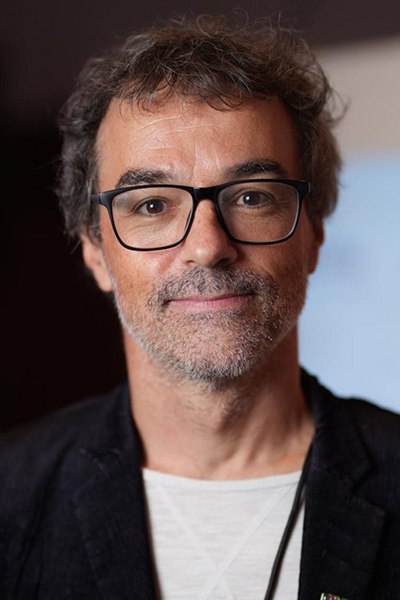
During the 2026 San Antonio Breast Cancer Symposium®, Fabrice André, MD, PhD, will explore these in a plenary lecture, Precision Medicine for Patients Living With Breast Cancer, on Friday, December 11, from 8:45 to 9:15 a.m. CT in Hall 1 of the Henry B. Gonzalez Convention Center.
“There are four main questions regarding the framework of precision medicine for patients with this type of breast cancer,” said Dr. André, professor of medicine at Paris-Saclay University and director of research at Gustave Roussy. “First, is how to identify the patient at high risk for toxicity, relapse, or death on a large scale.”
The second question will center on potential solutions to improve survival of high-risk patients with HR-positive breast cancer by way of molecular analysis. Dr. André will review what has been learned from multigene sequencing in this patient population.
The third question will focus on what is being done in precision medicine for the patient who is at low risk for relapse.
“Of course, we de-escalate treatment to reduce toxicity for these patients, but also we can work to identify those who may present with higher risk for toxicity of endocrine therapy, in particular,” Dr. André said. “This topic is very important, because nowadays, most of these patients are cured, but they still receive large amounts of therapies. It is a medical need for which precision medicine may probably help.”
The fourth question will address the development of tumor-agnostic drugs based on molecular alterations, regardless of where the cancer originates. Dr. André also plans to discuss “how to better represent cancer to patients.”
In addition, Dr. André hopes attendees will ponder several topics when they return home. “First, how do we develop technologies for precision medicine that are affordable, accessible to everyone, and able to be implemented on a large scale? Second, how can we introduce new technologies, such as patient-derived organoids, for precision medicine decisions?”
Finally, Dr. André plans to explore the concept of patient similarity—leveraging shared characteristics and patterns—and how generative artificial intelligence will possibly change the paradigm of medicine.
“We may be moving from what we call evidence-based medicine to medicine that is based more on patient similarity and virtual twins,” he said.
Session titles, times, and locations are subject to change. For the most up-to-date SABCS 2026 program information, please visit the Program page at SABCS.org.